

Important notice
This guide is educational and does not replace medical, speech-language pathology, nutrition or health care team assessment. Do not use this content to define diet, thickeners, exercises or restrictions on your own. Seek urgent care for shortness of breath, choking with obstruction, fever, confusion, significant dehydration, inability to swallow saliva or rapid worsening.
Quick summary
- Dysphagia is difficulty swallowing saliva, liquids, foods or medicines.
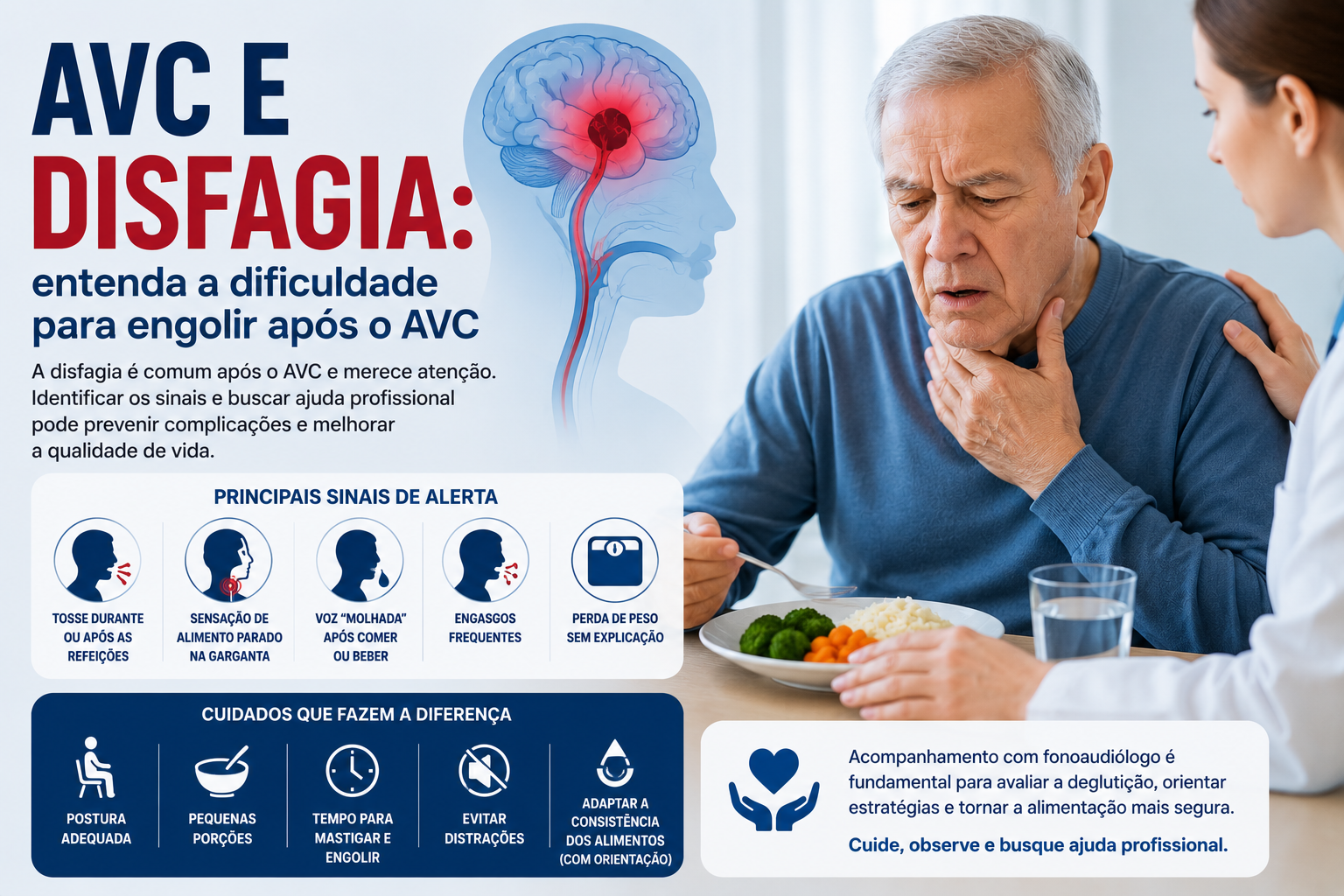
- Common signs include coughing while eating, choking, wet voice, food sticking, weight loss, dehydration and recurrent respiratory infections.
- Professional assessment helps distinguish oropharyngeal, esophageal or mixed dysphagia and guide eating safety.
- Screenings organize signs, but they do not confirm diagnosis or define treatment.
What is dysphagia?
Dysphagia is difficulty moving saliva, liquids, foods or medicines from the mouth to the stomach. It may involve the mouth, throat, esophagus or more than one swallowing phase.
The difficulty may be mild, intermittent, progressive or severe. Some people notice choking; others have less obvious signs such as weight loss, recurrent fever or wet voice after eating.
Signs that deserve attention
Watch for coughing during or after meals, choking, persistent throat clearing, wet voice, slow meals, repeated swallows, food sticking, drooling, weight loss, low fluid intake and recurrent pneumonia.
One isolated sign does not confirm dysphagia, but persistent, progressive or weight-loss and respiratory-related signs justify assessment.
Warning and urgent signs
Seek care promptly for shortness of breath, choking with obstruction, fever after coughing with meals, confusion, new sleepiness, significant dehydration, inability to swallow saliva, severe pain or rapid worsening.
People after stroke, with Parkinson disease, dementia, head and neck cancer, frailty, recent hospitalization or recurrent pneumonia need closer attention when unsafe swallowing signs appear.
Aspiration, hydration and nutrition
Aspiration happens when saliva, liquids, food or gastric content enters the airway. Not every aspiration event causes pneumonia, but risk increases with weak cough, frailty, neurological disease, malnutrition or recurrent respiratory infection.
Dysphagia may also reduce water and food intake, causing dehydration, constipation, weight loss, fear of eating and lower quality of life.
How to observe meals safely
Record the food or liquid type, body position, timing, meal speed, cough, voice change, fatigue, shortness of breath and food-sticking sensation.
Do not make broad texture changes, thicken liquids or restrict foods without guidance. Inappropriate changes may worsen hydration, nutrition and eating enjoyment.
When to seek assessment
Seek a speech-language pathologist, physician or health care team if symptoms are frequent, progressive, linked to weight loss, pneumonia, dehydration, fear of eating, difficulty with pills or changes after stroke, surgery, hospitalization or new disease.
Assessment may include clinical history, meal observation, physical exam, medicine review, nutrition assessment and instrumental tests when indicated.
How to use screening tools
The educational screening helps record symptoms such as effortful swallowing, throat clearing, voice change, choking, pneumonia and fatigue while eating.
Use results as a summary to discuss with the care team, not as diagnosis or prescription.
Signs and next steps
| Observed sign | Why it matters | Educational next step |
|---|---|---|
| Coughing or choking while eating | May indicate food or liquid entering toward the airway. | Record frequency and seek assessment if persistent. |
| Wet voice after swallowing | May suggest residue or insufficient airway protection. | Discuss with a speech-language pathologist or health care team. |
| Weight loss or low intake | May indicate nutritional risk and functional impact. | Assess nutrition, hydration and eating safety. |
| Recurrent pneumonia or fever | May be linked to aspiration or other respiratory problems. | Seek medical assessment. |
Dysphagia
Take the related screening
Educational questionnaire for signs of swallowing difficulty.
Start the screeningEducational next steps
- Write down concrete examples before the appointment: food, liquid, frequency, timing and associated symptoms.
- Bring information about neurological diseases, stroke, surgeries, hospitalizations, medicines and weight loss.
- Use screening tools to organize signs, but seek assessment for decisions about diet, texture and safety.
- If urgent signs are present, do not wait to repeat screening.
Frequently asked questions
No. Choking can be a sign, but dysphagia means difficulty swallowing. Dysphagia may also occur with few visible signs.
Not necessarily. The right consistency depends on dysphagia type, risks, hydration, nutrition and professional assessment.
Speech-language pathologists have a central role in swallowing assessment, together with physicians, dietitians, nurses and other professionals when needed.
No. Screening organizes warning signs, but diagnosis and care decisions depend on professional assessment.
Related articles
View all articles
References
- American Speech-Language-Hearing Association. Adult Dysphagia.
- NHS. Dysphagia (swallowing problems).
- Mayo Clinic. Dysphagia - Symptoms and causes.
- Guy's and St Thomas' NHS Foundation Trust. Dysphagia or swallowing problems.
- StatPearls/NCBI Bookshelf. Dysphagia.
- DisfagiaApp. Solução multiplataforma para apoio ao rastreamento de risco da disfagia orofaríngea.